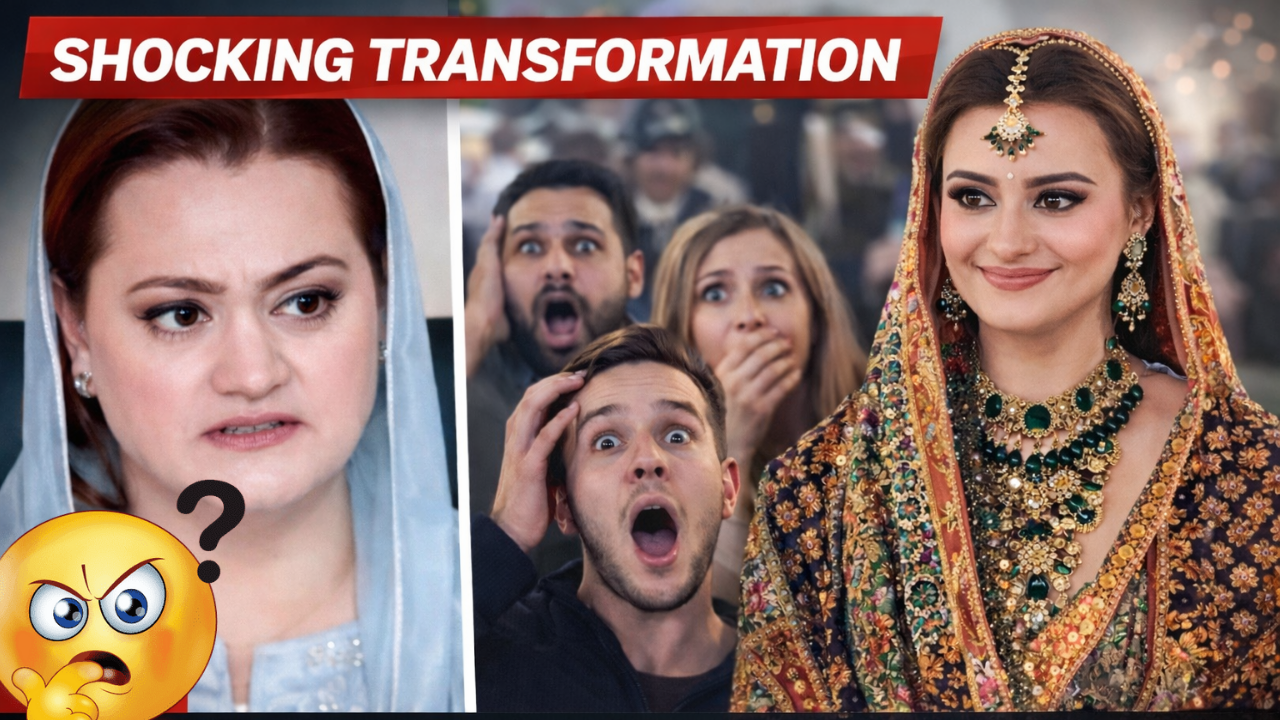
The Marriyum Aurangzeb transformation has become one of the most talked-about topics on Pakistani social media after a recent wedding photo unexpectedly went viral. The image, captured during the wedding celebrations of Junaid Safdar, instantly caught public attention and triggered widespread discussion across digital platforms.

What surprised many viewers was the visibly refined appearance of Marriyum Aurangzeb, who currently serves as Punjab’s Senior Minister for Information and Environment. Her updated look led users to describe the moment as a dramatic “glow-up,” sparking admiration, curiosity, and speculation in equal measure.
Why the Marriyum Aurangzeb Transformation Went Viral
The viral image originated from a high-profile wedding event, where Marriyum Aurangzeb appeared with noticeably sharper facial features and a slimmer frame. Compared to her previous public appearances—particularly press conferences and official briefings—many social media users felt the change was striking.
The Marriyum Aurangzeb transformation gained momentum within hours, as the image was shared widely on platforms such as X (formerly Twitter), Instagram, and Facebook. Screenshots and side-by-side comparisons with older photographs fueled online engagement and kept the topic trending.
Social Media Reactions: Praise, Curiosity, and Debate
Positive Responses and Support
A large segment of users praised the transformation, applauding her confidence, styling, and overall appearance. Supporters emphasized that public figures, especially women in politics, are often judged unfairly and should be free to present themselves however they choose.

Many comments celebrated the Marriyum Aurangzeb transformation as a symbol of personal growth, improved wellness, and self-care—especially in a profession known for its relentless public scrutiny.
Fitness Envy and Lifestyle Discussions
Another wave of reactions revolved around fitness motivation. Several users openly admitted to experiencing “fitness envy,” asking about diet routines, exercise habits, and lifestyle changes that could lead to such a visible difference.
This response shifted the conversation toward broader discussions on health, discipline, and work-life balance for individuals in demanding leadership roles.
Speculation Around Weight Loss and Cosmetic Procedures
Unverified Claims Circulating Online
As often happens with viral celebrity moments, speculation quickly followed. Some users made unverified claims suggesting the use of weight-loss injections, cosmetic treatments, fillers, or surgical procedures.

However, it is important to clarify that there is no confirmed or credible evidence supporting any of these claims. Neither Marriyum Aurangzeb nor any official source has made statements indicating the use of medical weight-loss drugs or cosmetic enhancements.
Why Responsible Reporting Matters
The Marriyum Aurangzeb transformation highlights a recurring issue in digital culture: how quickly assumptions can turn into misinformation. Speculating without evidence not only invades personal privacy but also reinforces harmful narratives, especially for women in leadership.
Media Scrutiny and Women in Politics
Double Standards in Public Perception
Female politicians often face harsher judgment for their appearance than their male counterparts. The attention surrounding the Marriyum Aurangzeb transformation reflects a broader societal pattern where women’s looks are analyzed more than their professional contributions.
Despite holding a senior cabinet position and playing a key role in governance, the conversation largely shifted toward her appearance rather than her policy work or leadership responsibilities.

The Pressure of Constant Visibility
Public officials live under constant observation. From official events to private gatherings, every appearance can be photographed, shared, and scrutinized. This reality makes personal transformation—whether through health, fashion, or aging—a public spectacle.
Health, Wellness, and Natural Change
Transformation Doesn’t Always Mean Intervention
Experts frequently note that visible changes can result from simple lifestyle adjustments such as improved nutrition, regular exercise, stress management, and better sleep routines.
The Marriyum Aurangzeb transformation could easily fall into this category, reminding audiences that not every physical change requires medical or cosmetic explanations.
Aging, Styling, and Presentation
Factors such as lighting, makeup, wardrobe, posture, and camera angles can significantly affect how a person appears in photographs. A single viral image may not accurately represent long-term changes.

Public Silence and Respecting Personal Boundaries
Marriyum Aurangzeb has not publicly addressed the viral discussions, choosing instead to maintain focus on her official duties. This silence underscores an important point: public figures are not obligated to explain personal changes unless they choose to do so.
Respecting boundaries is essential, especially when conversations shift from admiration to invasive speculation.
What This Moment Reveals About Digital Culture
Viral Moments Are Often Misleading
The Marriyum Aurangzeb transformation demonstrates how quickly a single image can dominate online narratives. Viral content often lacks context, yet it shapes public perception at scale.
The Role of Social Media Algorithms
Algorithms amplify content that generates strong emotional reactions—whether positive or negative. This explains why transformation stories, especially involving well-known personalities, spread so rapidly.

Key Takeaways from the Marriyum Aurangzeb Transformation
- A single photograph can spark nationwide discussion
- Appearance-based scrutiny disproportionately affects women in power
- Speculation without evidence contributes to misinformation
- Lifestyle changes can explain many physical transformations
- Public figures deserve privacy beyond their official roles
Conclusion
The Marriyum Aurangzeb transformation is less about physical change and more about how society reacts to it. While admiration and curiosity are natural, responsible dialogue matters—especially in an era where misinformation spreads faster than facts.
Ultimately, the episode serves as a reminder to focus on substance over appearance and to approach viral moments with empathy, restraint, and critical thinking.