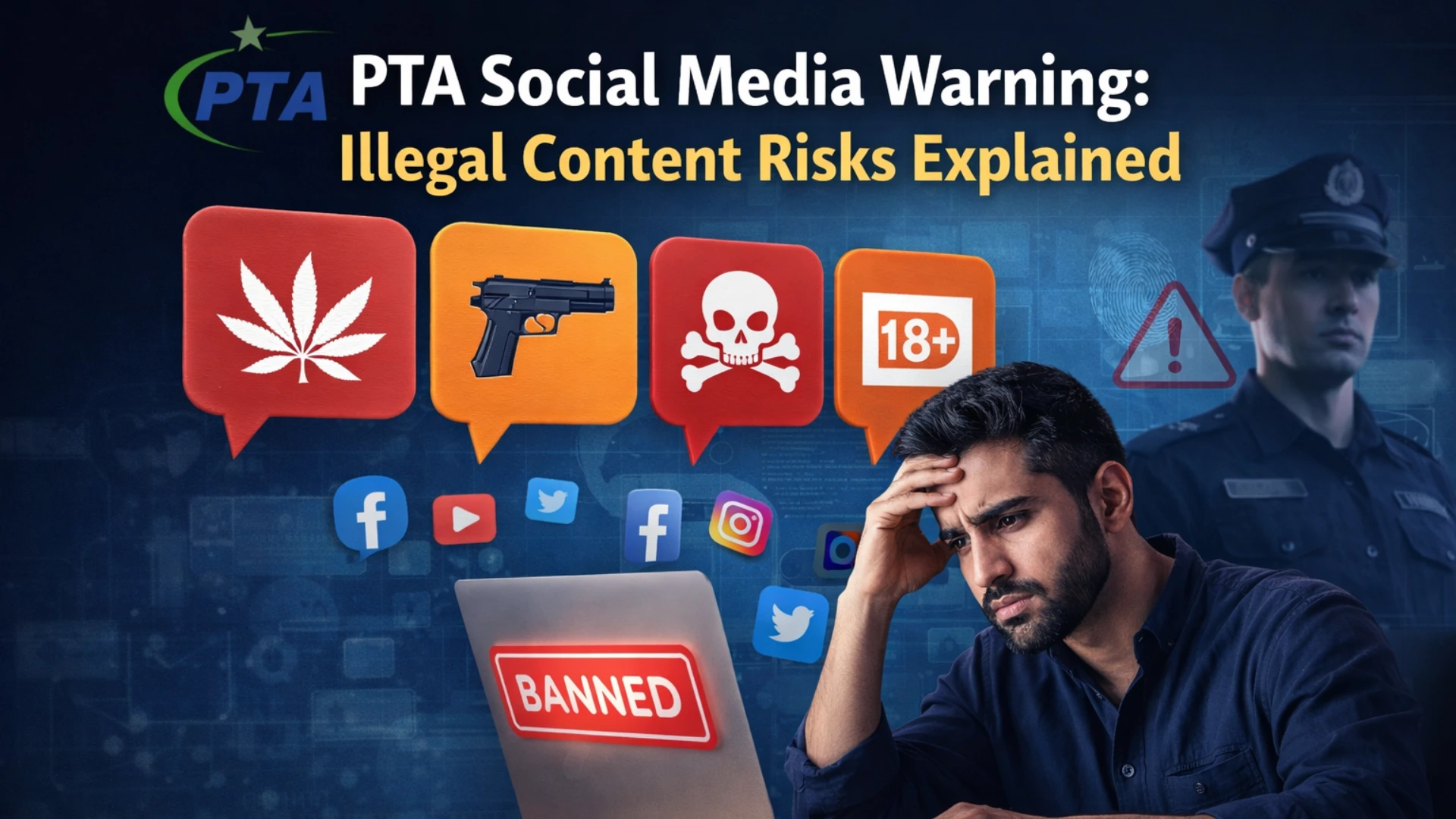
PTA social media warning has once again highlighted the growing risks associated with irresponsible use of digital platforms in Pakistan. The Pakistan Telecommunication Authority (PTA) has urged citizens to remain cautious while using social media, stressing that online behavior carries legal, ethical, and social consequences.

As digital platforms increasingly shape public opinion, the PTA emphasizes that responsible online engagement is not just an individual choice—it is a shared national responsibility.
Understanding the PTA Social Media Warning
The PTA social media warning focuses on preventing the spread of content that is illegal, hateful, defamatory, or misleading. According to the regulator, such material can cause serious harm to individuals and undermine the credibility of state institutions, including the judiciary.
Social media may feel informal, but the PTA reminds users that the law applies equally in digital spaces.

Why the PTA Issued This Social Media Warning
Rising Misuse of Online Platforms
The PTA has observed a noticeable increase in the circulation of false narratives, hate speech, and unverified claims across social networks. This trend threatens public trust and creates unnecessary social tension.
Impact on Individuals and Institutions
Under the PTA social media warning, the authority explains that defamatory or false content can:
- Damage personal reputations
- Create legal complications for users
- Harm the credibility of government bodies
- Disrupt the stability of the digital ecosystem
Legal Framework Behind the PTA Social Media Warning
PECA 2016 and Digital Crimes
The PTA clarified that violations mentioned in the PTA social media warning fall under the Prevention of Electronic Crimes Act (PECA), 2016.

Key offences under PECA include:
- Spreading false or misleading information
- Online harassment and hate speech
- Defamation through digital platforms
- Sharing illegal or harmful material
Violators may face fines, imprisonment, or both, depending on the severity of the offence.
Shared Responsibility Emphasized by PTA
The PTA social media warning clearly states that digital safety is a collective effort. While authorities monitor and regulate platforms, users must also act responsibly.
Role of Citizens
- Verify information before sharing
- Avoid emotional or hateful responses
- Respect legal and ethical boundaries
- Report harmful content through official channels
PTA’s Efforts to Promote Responsible Digital Behavior
Awareness Campaigns
As part of the PTA social media warning, the authority confirmed that it regularly conducts:

- Public awareness campaigns
- Educational initiatives
- Digital literacy programs
These efforts aim to educate users about their rights and responsibilities online.
Empowering Users with Knowledge
The PTA believes that informed citizens are less likely to misuse social media. By understanding the law and ethical standards, users can contribute to a safer digital environment.
Ethical Online Engagement: PTA’s Core Message
The PTA social media warning goes beyond legal enforcement. It promotes ethical digital behavior that supports:

- Constructive dialogue
- Respectful communication
- Fact-based discussions
- Positive online culture
PTA stresses that freedom of expression must be balanced with accountability.
Risks of Ignoring the PTA Social Media Warning
Failing to follow the guidelines outlined in the PTA social media warning can lead to:
- Legal notices or investigations
- Content removal or account restrictions
- Criminal charges under PECA 2016
- Long-term damage to personal credibility
Social media actions leave digital footprints that can be traced and used as evidence.

How to Stay Compliant with PTA Guidelines
Best Practices for Social Media Users
- Cross-check news from reliable sources
- Avoid forwarding unverified messages
- Think before posting opinions about sensitive matters
- Respect institutions and individuals online
Reporting Harmful Content
The PTA encourages users to report illegal or harmful content instead of engaging with it. This supports the authority’s efforts to maintain digital integrity.
Building a Safer Digital Pakistan
The PTA social media warning reinforces the idea that a secure online environment benefits everyone. Responsible usage strengthens democracy, protects individuals, and preserves trust in digital communication.
Positive engagement, factual sharing, and ethical conduct are essential pillars of Pakistan’s digital future.
Conclusion
The PTA social media warning serves as a timely reminder that social media freedom comes with responsibility. By adhering to legal frameworks like PECA 2016 and practicing ethical online behavior, citizens can help create a safe, trustworthy, and constructive digital space.
Responsible social media use is not just about avoiding penalties—it’s about protecting society, institutions, and ourselves.