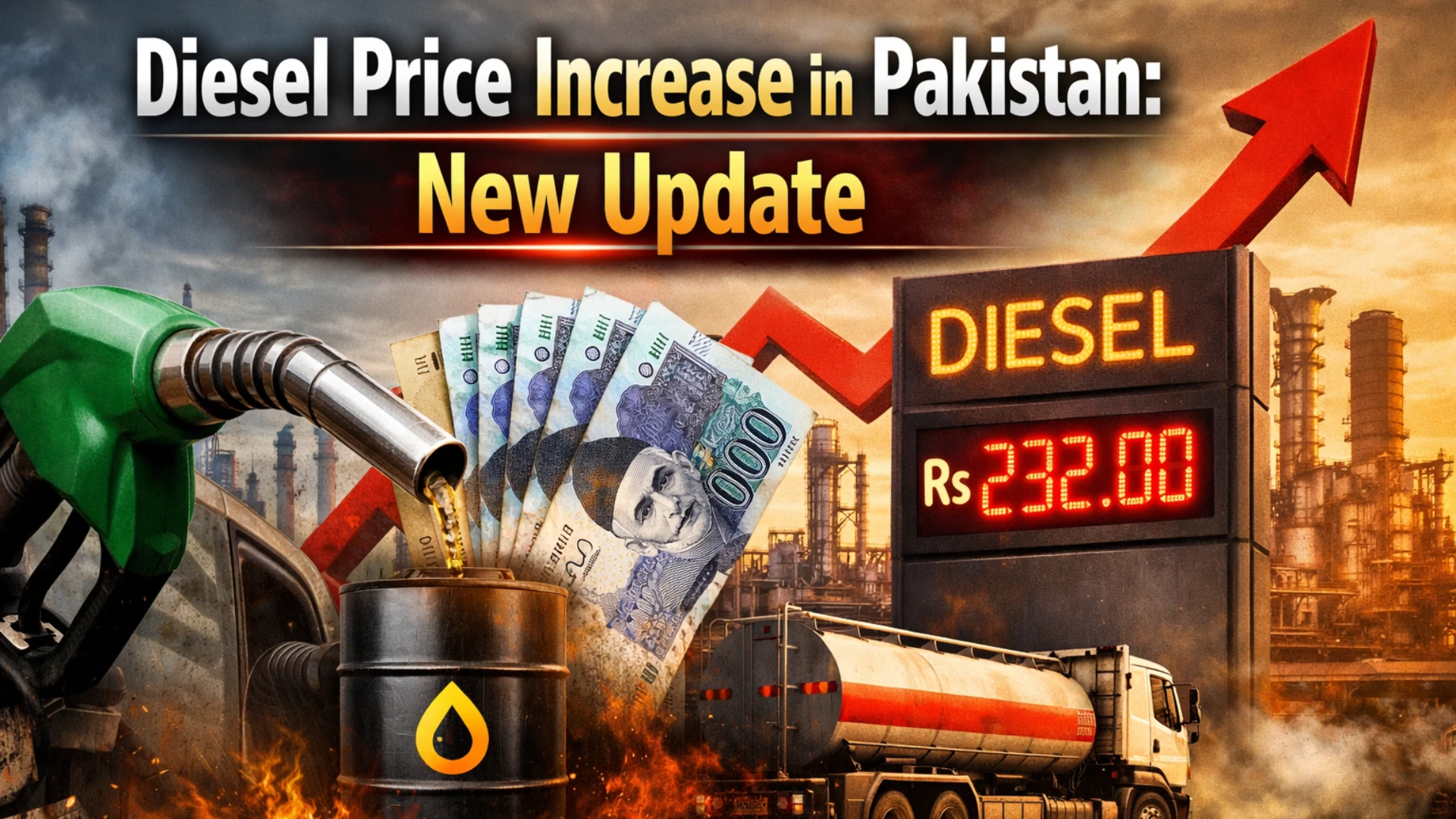
The Diesel Price Increase in Pakistan has been officially announced by the federal government, with rates set to change from February 1, 2026. According to the Ministry of Energy, the price of high-speed diesel (HSD) has risen by Rs. 11.30 per litre, now standing at Rs. 268.38 per litre. Meanwhile, petrol prices have been kept stable at Rs. 253.17 per litre for the next 15 days.

This update comes following recommendations from the Oil and Gas Regulatory Authority (OGRA) and reflects broader economic factors affecting fuel costs in the country. Diesel is a critical commodity, used widely in transport, agriculture, and industrial sectors, making this price hike a topic of significant public interest.
Current Diesel Prices in Pakistan (February 2026)
The latest diesel rates are crucial for businesses and households alike. Here’s a detailed breakdown:
| Fuel Type | Old Price (Rs/Litre) | New Price (Rs/Litre) |
|---|---|---|
| High-Speed Diesel (HSD) | 257.08 | 268.38 |
| Petrol (Motor Spirit) | 253.17 | 253.17 |
This table clearly shows a noticeable increase in diesel costs, while petrol remains stable, reflecting the government’s decision to manage inflation pressures without affecting daily commuters immediately.

Reasons Behind Diesel Price Increase
Several factors contribute to the diesel price increase in Pakistan:
- Global Crude Oil Prices – Fluctuating crude oil rates directly impact local fuel costs.
- Currency Exchange Rates – Depreciation of the Pakistani Rupee against the US Dollar makes imports costlier.
- OGRA Recommendations – Regulatory authority ensures fuel pricing aligns with international and domestic market conditions.
- Inflationary Trends – Rising costs in transport and industry indirectly affect fuel pricing decisions.
Understanding these factors helps consumers and businesses anticipate potential impacts on their monthly budgets.
Impact of Diesel Price Increase on Transport and Industry
The diesel price increase in Pakistan affects multiple sectors:

Transport Sector
Diesel is the primary fuel for buses, trucks, and logistics companies. A hike in diesel prices often leads to:
- Increased transportation costs
- Higher freight charges
- Rising prices for essential goods due to added logistic expenses
Agriculture Sector
Farmers relying on diesel-powered tractors, irrigation pumps, and other machinery may face higher operational costs, impacting overall agricultural production costs.
Industrial Sector
Industries using diesel for generators and machinery may adjust pricing strategies to offset increased fuel expenditure, which could eventually affect end consumers.

Petrol Prices Remain Unchanged
Interestingly, while diesel prices have surged, petrol prices in Pakistan remain constant at Rs. 253.17 per litre. The government has explicitly decided to maintain petrol rates for the next fortnight to prevent sudden shocks for commuters who depend on petrol-powered vehicles.
This approach allows households and small businesses some breathing room while diesel price adjustments are assessed for longer-term economic impacts.
Government Policy on Fuel Pricing
The government reviews fuel prices every 15 days. This bi-weekly adjustment policy aims to:

- Align fuel prices with global oil trends
- Mitigate inflationary pressures
- Provide a transparent and predictable pricing mechanism
OGRA’s Role
The Oil and Gas Regulatory Authority (OGRA) plays a key role by recommending price changes based on:
- International crude oil benchmarks
- Local market supply-demand conditions
- Exchange rate fluctuations
Their assessment ensures that fuel pricing is neither arbitrary nor delayed, maintaining market stability.
How Consumers Can Prepare
With the diesel price increase in Pakistan, consumers and businesses should adopt proactive strategies:

- Transporters: Adjust freight and delivery charges in advance
- Farmers: Plan machinery usage efficiently to manage diesel consumption
- Industries: Consider alternative energy sources or fuel-efficient practices
- Households: Budget for potential indirect price increases in goods and services
Adopting these measures can help mitigate the financial impact of rising diesel costs.
Frequently Asked Questions (FAQs)
Why did diesel prices increase while petrol remained stable?
The government bases diesel adjustments on global market trends and domestic demand, whereas petrol prices were kept stable to prevent immediate financial burden on daily commuters.
When will the next fuel price review occur?
Fuel prices in Pakistan are reviewed every 15 days, with any changes implemented following OGRA recommendations.
How does diesel price affect inflation?
Diesel is widely used in transport, agriculture, and industry. Higher diesel costs raise production and transport expenses, which can lead to price hikes across goods and services.
Conclusion
The diesel price increase in Pakistan marks a significant adjustment for consumers and businesses alike. At Rs. 268.38 per litre, diesel is notably higher, while petrol remains unchanged at Rs. 253.17 per litre. Understanding the reasons behind this change, including global oil trends, currency fluctuations, and regulatory recommendations, helps stakeholders plan accordingly.
For the general public, the bi-weekly review system provides some predictability, allowing households, transporters, and industries to adapt to market changes efficiently.