
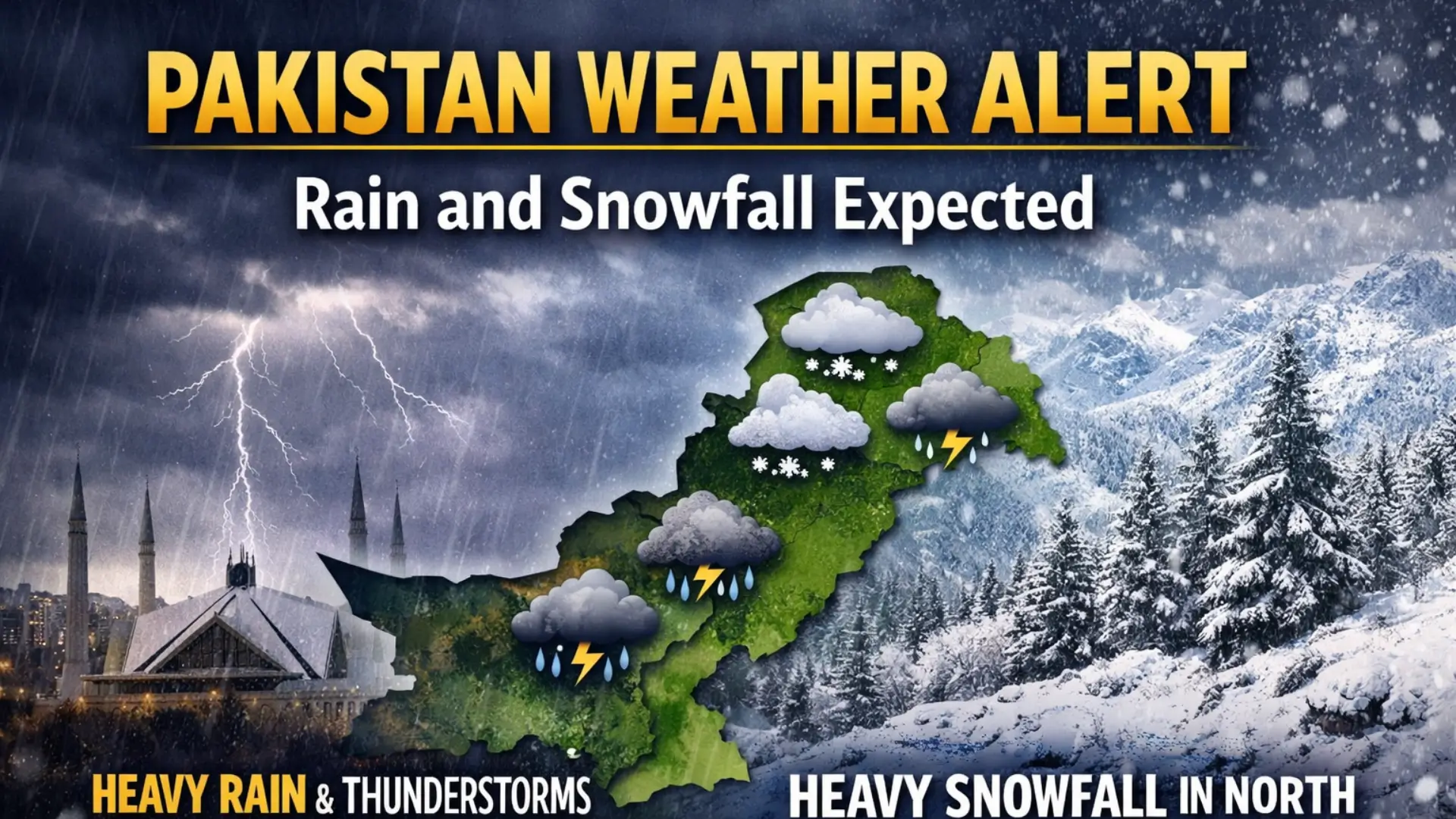
Pakistan Weather Alert. Pakistan Meteorological Department has issued an updated weather forecast, warning of heavy rainfall and snowfall in various regions, while the majority of the country continues to experience cold and dry conditions. Citizens are advised to stay updated with local weather reports and take necessary precautions in areas expecting extreme weather.
Nationwide Weather Overview

According to the latest advisory from the Met Office, the weather across Pakistan is expected to vary significantly in the coming days. While large parts of the country are likely to remain cold and dry, specific regions, particularly in northern and hilly areas, are predicted to experience rain and snowfall.
Islamabad, the nation’s capital, is expected to stay cold and dry in the next few days. Similarly, much of Khyber Pakhtunkhwa, including major cities like Peshawar, is forecasted to experience stable weather with cold and dry conditions. However, northern districts of the province may see a notable shift, as rainfall and snowfall are predicted.
Rainfall Forecast in Khyber Pakhtunkhwa
The Met Office has forecast rain in multiple districts of Khyber Pakhtunkhwa, signaling a change in weather for these areas. The districts included in this alert are:

- Dir
- Battagram
- Torghar
- Mansehra
- Haripur
- Abbottabad
- Bajaur
- Orakzai
- Khyber
- Kohat
- Hangu
- Karak
- Bannu
- Lakki Marwat
- Dera Ismail Khan
- Tank
- North Waziristan
- South Waziristan
These areas are expected to experience light to moderate rainfall over the coming days, while higher altitudes may witness heavier precipitation and snow accumulation. Local authorities in these regions are advised to prepare for possible disruptions in travel and daily activities due to wet and slippery conditions.
Snowfall in Northern Districts and Mountains
The northern mountainous areas of Khyber Pakhtunkhwa, along with upper districts, are likely to see snowfall as temperatures remain low. This includes popular mountain regions that attract tourists and hikers during the winter season.
Snow accumulation in these areas could affect road connectivity, particularly in passes and hilly terrains. Travelers are advised to exercise caution, avoid unnecessary journeys, and ensure vehicles are equipped for winter driving. Authorities may also issue temporary road closures if snowfall becomes heavy.

Weather in Sindh and Balochistan
In contrast to the northern regions, most areas in Sindh and Balochistan are expected to remain cold but dry. Cities such as Karachi, Hyderabad, Quetta, and Gwadar are likely to experience clear skies, with minimal rainfall predicted in the coming week.
The dry weather in these provinces is expected to persist, although temperatures will remain low, particularly during early mornings and nights. Citizens are advised to dress warmly and use adequate heating measures to avoid cold-related health issues.
Azad Jammu & Kashmir and Gilgit-Baltistan Forecast
For Azad Jammu and Kashmir (AJK) and Gilgit-Baltistan (GB), the Met Office predicts that cold weather will continue, with skies remaining partly cloudy. Residents of these regions should prepare for chilly conditions, especially in high-altitude areas, where temperatures may drop significantly below freezing at night.

Light snow is also possible in upper regions of AJK and GB, affecting remote villages and mountainous areas. Travelers and locals should remain vigilant and monitor weather updates regularly.
Key Weather Warnings and Safety Measures
The Met Office advisory highlights the following precautions for citizens in affected areas:
- Travel Safety: Roads in northern Khyber Pakhtunkhwa and mountainous regions may become slippery due to rain and snow. Avoid unnecessary travel.
- Health Precautions: Cold and dry weather can lead to respiratory illnesses. Wear warm clothing and maintain proper hydration.
- Infrastructure Preparedness: Local authorities should check drainage systems and maintain emergency response units in flood-prone areas.
- Tourist Awareness: Tourists visiting northern areas, especially snow-prone regions, should confirm weather conditions and ensure proper winter gear.
Impact on Agriculture and Livelihoods
The weather changes could have a direct impact on agriculture and daily livelihoods. In rain-affected districts of Khyber Pakhtunkhwa:

- Crops may benefit from moderate rainfall, but heavy showers could damage winter crops.
- Livestock in high-altitude areas may require additional shelter and feed during snowfall.
- Transport of goods may face delays due to slippery roads and temporary road closures.
Farmers and traders are advised to stay updated with local weather alerts and take precautionary measures to protect crops and livestock.
Travel and Tourism Advisory
Tourists planning to visit mountainous or northern regions should be aware of potential travel disruptions due to snow and rain. Popular destinations like Murree, Naran, Kaghan, and Skardu may experience temporary closures of roads and hiking trails.
Travelers are advised to:

- Check weather updates before starting their journey.
- Carry warm clothing, food, and emergency supplies.
- Follow instructions from local authorities and park management.
- Avoid traveling during heavy snowfall or rainfall events.
Meteorological Explanation
The current weather patterns are influenced by Western Disturbances — weather systems that bring rain and snowfall to northern and central Pakistan during winter. These disturbances often lead to fluctuations in temperature, increased precipitation, and occasional snowfall in hilly and mountainous regions.
The continuation of cold and dry conditions in southern and central Pakistan is due to stable air masses and high-pressure systems, preventing rainfall in these areas.
Local Authorities Role
The Met Office’s advisory serves as a critical warning for local administrations to:
- Ensure timely response to emergencies in rain- and snow-affected districts.
- Maintain communication with remote villages to provide assistance if needed.
- Prepare medical facilities to treat cold-related health issues.
- Monitor rivers and streams for potential flooding in heavy rainfall regions.
Tips for Citizens
Residents and visitors are encouraged to follow these safety tips:
- Stay updated with daily weather forecasts.
- Avoid traveling through isolated or high-altitude areas during heavy snowfall.
- Keep emergency kits ready, including food, water, and blankets.
- Ensure heating appliances are safely used indoors to prevent accidents.
- Drive cautiously on wet or icy roads.
Conclusion
Pakistan faces a mix of heavy rain, snowfall, and cold dry conditions across different regions. While northern areas and mountains prepare for precipitation, southern provinces remain cold and clear. Citizens, travelers, and authorities must stay vigilant, follow safety precautions, and monitor weather updates to navigate this winter season safely.