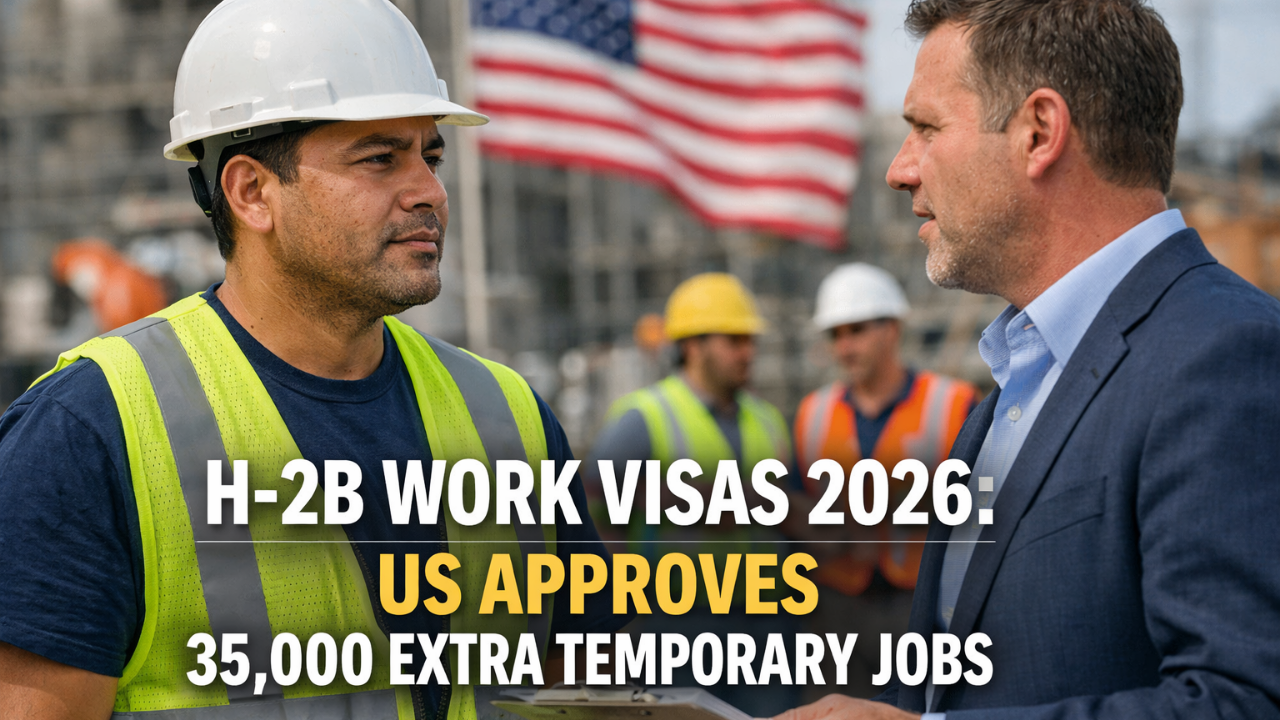
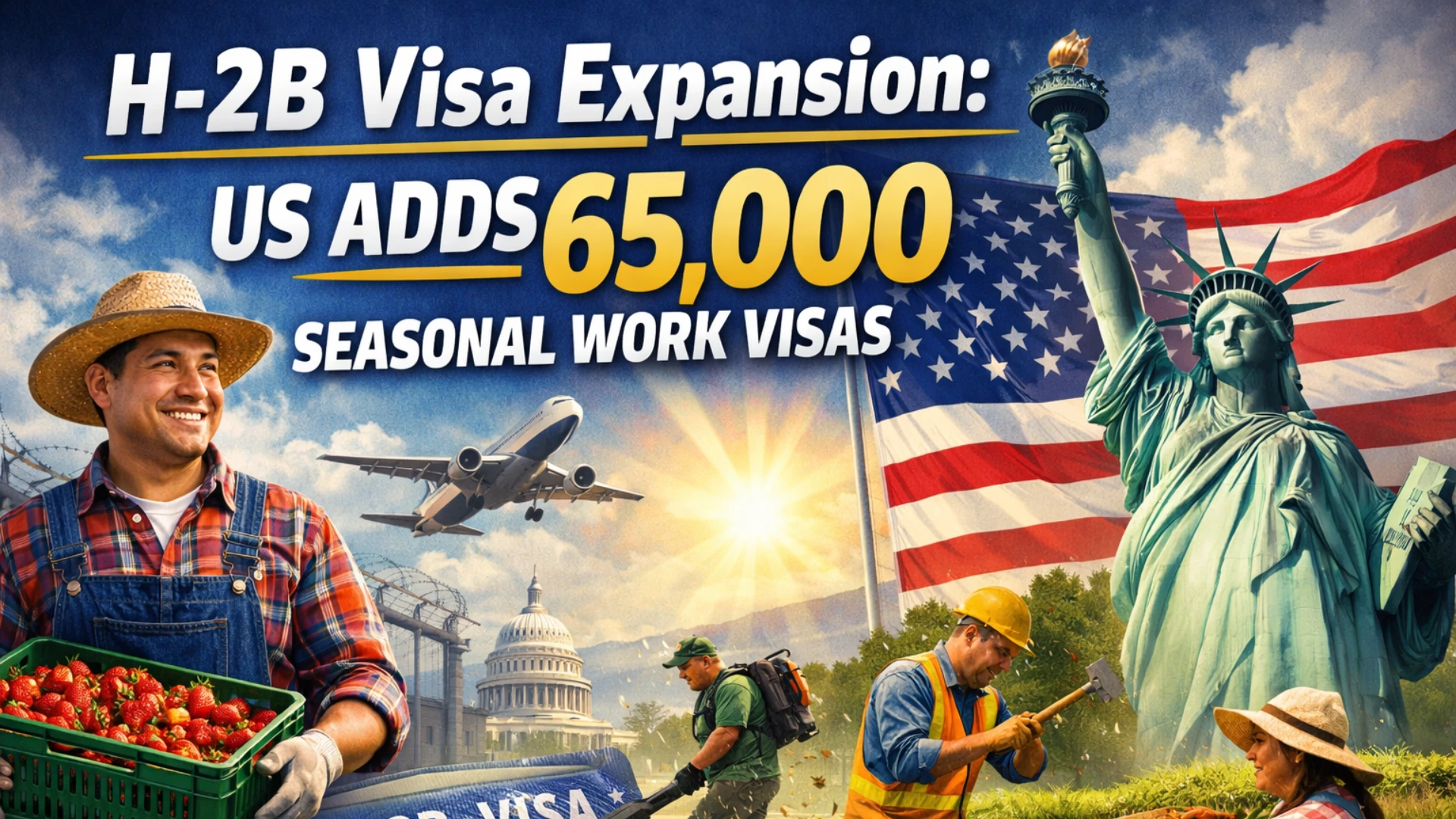
The H-2B visa expansion marks a significant move by the United States government to support employers struggling with seasonal labor shortages. By temporarily increasing the number of available visas, the policy aims to stabilize industries that rely heavily on short-term foreign workers while keeping essential services running smoothly.
What Is the H-2B Visa Expansion?

The H-2B visa expansion refers to the temporary increase in the number of H-2B non-agricultural work visas issued by the U.S. government. Traditionally capped at 66,000 visas per fiscal year, the program has been expanded by an additional 65,000 visas, effectively doubling availability for eligible employers.
This expansion was introduced to address persistent workforce gaps that domestic labor markets have been unable to fill, especially during peak seasonal demand.
Why the US Expanded the H-2B Visa Program
Severe Seasonal Labor Shortages
Many U.S. industries depend on seasonal workers to operate efficiently. Employers in hospitality, construction, landscaping, and seafood processing have repeatedly reported difficulties hiring enough U.S. workers despite offering competitive wages.
The H-2B visa expansion helps prevent business disruptions caused by unfilled roles.

Risk of Financial Hardship
According to official notices, the additional visas are targeted at businesses that can demonstrate potential financial harm due to labor shortages. Without adequate staffing, many seasonal employers face delayed projects, reduced services, or complete shutdowns.
Industries Benefiting From the H-2B Visa Expansion
Hospitality and Tourism
Hotels, resorts, and amusement parks rely heavily on seasonal labor during peak travel months. The H-2B visa expansion ensures these businesses can meet customer demand without compromising service quality.
Construction Sector
Construction companies often face project delays due to labor gaps. Access to additional H-2B workers allows firms to complete seasonal projects on time, supporting local economies.
Landscaping and Groundskeeping
Landscaping work is highly seasonal, particularly in spring and summer. The visa expansion supports small and mid-sized businesses that struggle to find reliable short-term labor.

Seafood Processing and Related Industries
Seafood processing facilities require large workforces during harvest seasons. The H-2B visa expansion helps maintain supply chains and prevents product loss.
How the Temporary Rule Works
Federal Register Announcement
The visa increase was introduced under a temporary rule and formally published in the Federal Register. This means the expansion is time-limited and subject to strict eligibility criteria.
Application Timeline
The additional visas are available through September 30, aligning with the end of the fiscal year. Employers must apply quickly and meet all Department of Labor and USCIS requirements.
Impact on US Workers and Wages
Supporters’ Perspective
Proponents argue that the H-2B visa expansion fills jobs that U.S. workers consistently decline. They emphasize that employers must first attempt to hire domestically before seeking foreign labor.

Critics’ Concerns
Opponents worry that expanding guest worker programs could suppress wages or reduce opportunities for U.S. workers. However, existing safeguards require employers to pay prevailing wages and comply with labor laws.
Historical Context of H-2B Visa Increases
This is not the first time the H-2B program has been expanded. Both Republican and Democratic administrations have previously increased visa caps to respond to economic and labor market pressures.
The continued use of temporary expansions highlights a long-term structural issue in seasonal workforce availability.
How the H-2B Program Supports the US Economy
The H-2B visa expansion helps:

- Keep seasonal businesses operational
- Protect local economies dependent on tourism and construction
- Maintain essential services during peak demand
- Reduce supply chain disruptions
By addressing labor shortages without permanently altering immigration levels, the program provides a balanced economic solution.
Eligibility Requirements for Employers
To benefit from the H-2B visa expansion, employers must:
- Prove a temporary or seasonal need
- Demonstrate insufficient U.S. worker availability
- Offer fair wages and working conditions
- Comply with federal labor regulations
These requirements ensure the program supports businesses responsibly.
Future Outlook of the H-2B Visa Expansion
While the current expansion is temporary, ongoing labor shortages suggest similar measures may continue in the future. Policymakers are increasingly viewing the H-2B program as a necessary economic tool rather than a short-term fix.
Long-term reforms may focus on balancing worker protections with employer needs.
Conclusion
The H-2B visa expansion plays a crucial role in addressing America’s ongoing seasonal labor shortages. By temporarily increasing visa availability, the program supports key industries, protects businesses from financial harm, and keeps essential services running. As workforce challenges persist, the H-2B program is likely to remain a central part of U.S. labor policy discussions.