
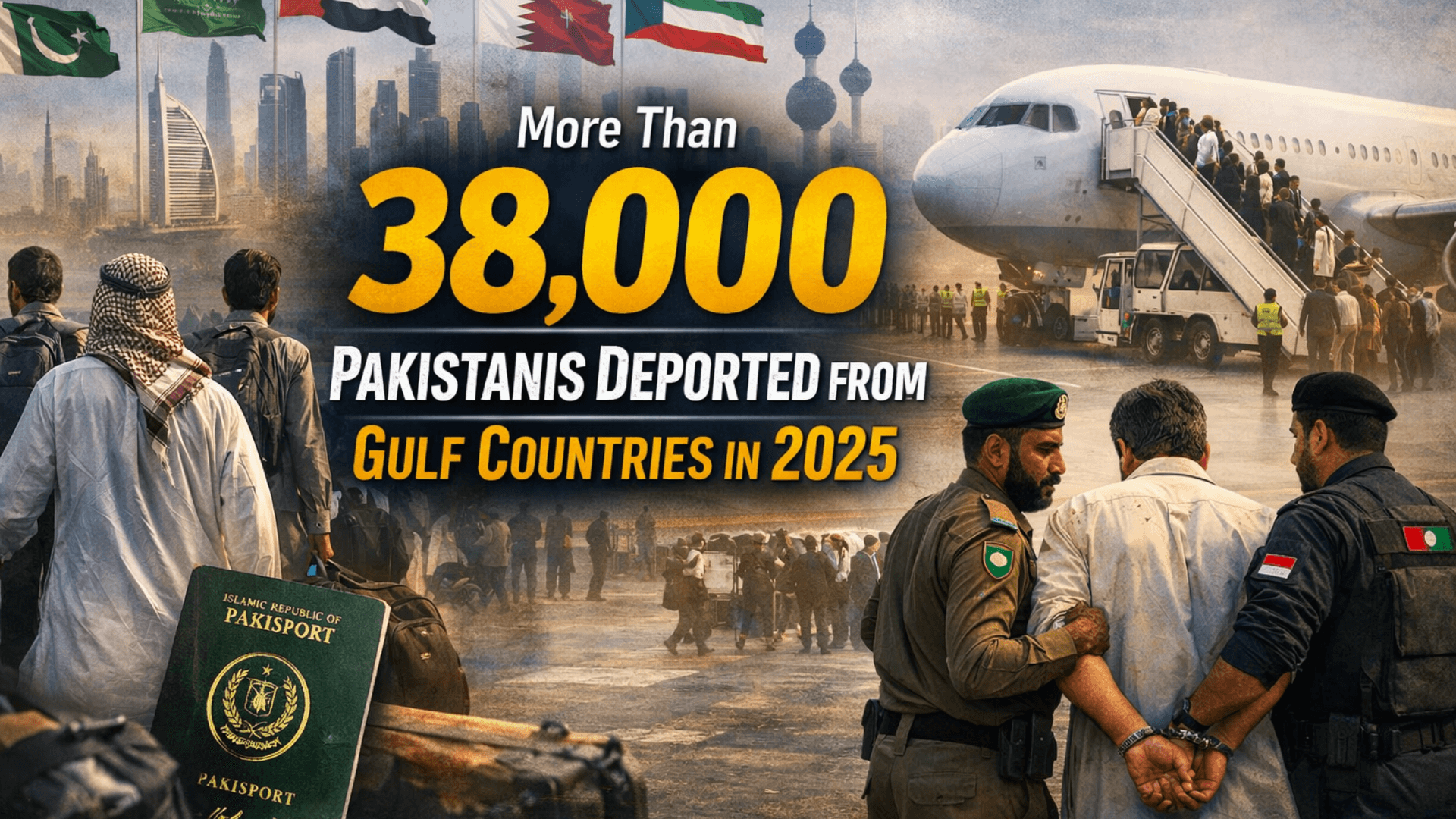
In 2025, over 38,000 Pakistanis deported from Gulf countries, reflecting the strict immigration policies enforced in the region. The data, reported by 24News, highlights the challenges faced by Pakistani nationals living and working in Gulf states. Countries including Saudi Arabia, the United Arab Emirates, Oman, Bahrain, Qatar, and Kuwait reported significant deportation numbers.

Deportations not only affect the lives of the individuals involved but also have economic and social implications, especially for families relying on remittances from Gulf-based employment. Understanding the reasons behind these deportations can help future migrants prepare better and reduce the risk of similar incidents.
Country-Wise Deportation Numbers in 2025
The largest number of deportations was recorded in Saudi Arabia, with 27,692 Pakistanis sent back to their home country. Following Saudi Arabia, the United Arab Emirates reported 6,794 deportations. Other Gulf states contributed as follows: Oman returned 2,537 Pakistanis, Bahrain 786, Qatar 644, and Kuwait 163.

| Country | Number of Pakistanis Deported |
|---|---|
| Saudi Arabia | 27,692 |
| United Arab Emirates | 6,794 |
| Oman | 2,537 |
| Bahrain | 786 |
| Qatar | 644 |
| Kuwait | 163 |
These figures illustrate the scale of the issue and indicate which Gulf countries are enforcing stricter immigration policies for foreign workers.
Main Reasons for Deportation
Authorities reported that Pakistani nationals were deported for a variety of reasons, ranging from administrative violations to legal and criminal issues.

1. Visa and Immigration Violations
- Overstaying visas: Many deportees had expired visas and failed to renew them on time.
- Illegal entry: Some individuals entered the Gulf states without proper documentation or overstayed their permitted duration.
- Visa infractions: Violating the terms of entry or work permits contributed to deportation cases.
2. Employment-Related Issues
- Absconding from employers: Workers leaving their assigned employers without approval were subject to immediate deportation.
- Contract breaches: Non-compliance with labor contracts or violating employment terms often led to legal action and deportation.
3. Criminal and Legal Offenses
- Involvement in narcotics or theft: Participation in illegal activities directly resulted in deportation.
- Fraud and forgery: Using fake documents or committing fraud increased deportation risk.
- Interpol-related issues: Individuals with pending Interpol notices or legal cases were also deported.
4. Documentation Problems
- Lost or damaged passports: Many deportees faced issues due to missing or invalid identification documents.
- Fake or forged documents: Using counterfeit documentation was a frequent cause for expulsion.
- Rejected asylum applications: Individuals seeking asylum without proper approval were sent back.
5. Other Contributing Factors
- Refusal of entry at airports: Some travelers were denied entry upon arrival due to incomplete paperwork.
- Births abroad without documentation: Children born outside Pakistan without proper registration faced deportation risks.
- Blacklisting by authorities: Individuals previously blacklisted for legal or administrative reasons were automatically deported.
Impact on Pakistani Migrants
The high deportation numbers in 2025 underscore the importance of legal compliance for Pakistani nationals working or traveling in Gulf countries. Non-compliance with immigration and labor laws can have severe consequences, including immediate deportation, blacklisting, and bans from future travel.
For families dependent on remittances from Gulf-based jobs, deportation can result in financial hardships. Additionally, it affects career prospects for migrant workers, as blacklisting and legal records can hinder reemployment opportunities in other countries.

How to Avoid Deportation in Gulf Countries
To minimize the risk of being deported, Pakistani nationals are advised to:
- Ensure proper documentation: Always keep passports, visas, and work permits updated and valid.
- Follow local laws: Understand and adhere to labor, immigration, and public regulations in the host country.
- Maintain employment contracts: Avoid absconding or violating employer terms.
- Avoid illegal activities: Stay clear of narcotics, theft, and fraudulent practices.
- Seek guidance: Consult embassies or legal authorities if facing visa or immigration issues.
Authorities emphasize that being well-informed and compliant can significantly reduce deportation risks. Proper planning before traveling or working abroad ensures safer migration and employment experiences.

Deportation Trends and Regional Analysis
Saudi Arabia consistently reports the highest number of deportations among Gulf countries due to its strict visa enforcement and labor policies. The UAE, while slightly more lenient, also maintains rigorous monitoring systems. Smaller states like Oman, Bahrain, Qatar, and Kuwait have fewer deportations but still follow strict immigration laws.
These trends highlight that Pakistanis deported from Gulf countries in 2025 were often caught in administrative or legal violations that could have been avoided with proper awareness and compliance.

Conclusion
The 2025 deportation statistics send a clear message: Pakistanis deported from Gulf countries in 2025 mostly faced consequences due to legal, administrative, or employment-related violations. Awareness, proper documentation, and adherence to local laws remain the most effective strategies to avoid deportation.
For Pakistani migrants and travelers, understanding country-specific regulations, renewing visas on time, and maintaining lawful conduct are crucial steps toward secure employment and travel in Gulf countries. These preventive measures not only protect individuals from deportation but also ensure financial and social stability for their families.