
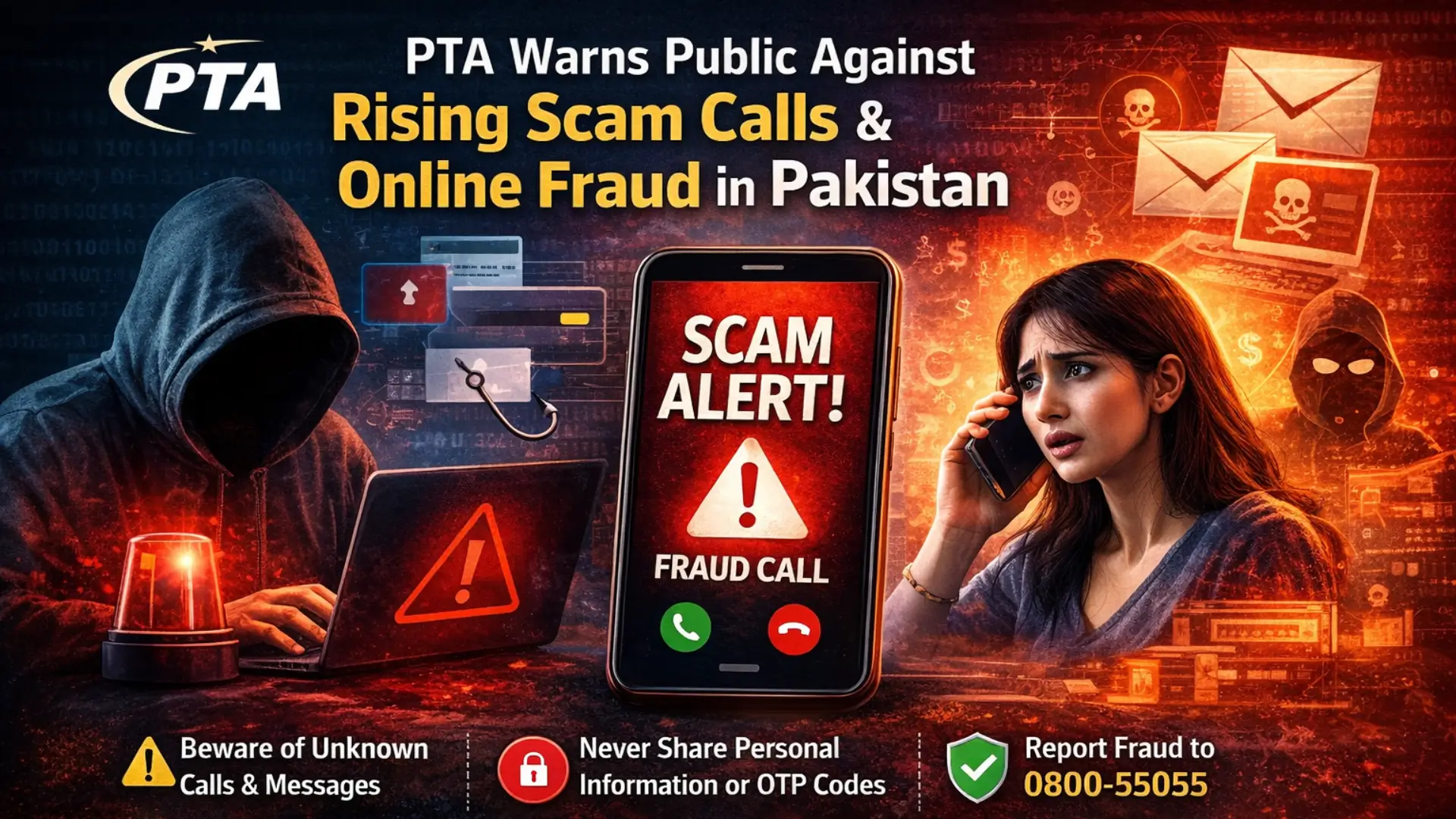
Rising Scam Calls and Online Fraud in Pakistan. The Pakistan Telecommunication Authority (PTA) has issued a critical warning to the public following a noticeable increase in scam calls and online fraud incidents across Pakistan. The advisory comes amid rising concerns over digital security and financial safety, as fraudsters employ sophisticated tactics to deceive citizens into sharing sensitive personal and financial information.

With the growing dependence on mobile phones, digital banking, and online services, cybercriminals are exploiting the trust and lack of awareness among users. PTA emphasizes the importance of staying alert, educating the public, and promptly reporting any suspicious activity.
Surge in Scam Calls and Online Fraud
The PTA has observed a significant rise in fraudulent activities targeting mobile users in Pakistan. Fraudsters are increasingly using phone calls, SMS messages, and online links to trick individuals into providing confidential information.
According to PTA, these scammers often impersonate trusted organizations, government bodies, or claim that the victim has won prizes, creating urgency and pressure to act immediately. Once personal or banking information is shared, victims may face serious financial losses or identity theft.
Key concerns highlighted by PTA include:

- A growing number of scam calls and online fraud cases
- Fake prize and reward claims
- Threats to personal and financial data
Common Scam Techniques Identified by PTA
PTA has identified multiple tactics commonly used by scammers to manipulate victims. Understanding these methods can help citizens protect themselves:
- Prize-winning calls: Fraudsters claim the recipient has won a large prize or reward and request banking or personal information to claim it.
- Suspicious links: Messages containing fake or malicious links can redirect users to fraudulent websites, potentially stealing personal data or installing malware.
- Requests for banking or personal details: Scammers ask for CNIC numbers, OTP codes, or account details under false pretenses, which can then be misused for financial fraud.
These techniques are designed to create urgency, leaving individuals little time to verify the legitimacy of the call or message.
PTA Safety Guidelines for Citizens
To protect citizens from scams, PTA has issued clear safety guidelines:
- Do not share personal or banking information: Never provide sensitive information to unknown callers, no matter how convincing they may sound.
- Avoid suspicious links: Refrain from clicking on links received through calls, messages, or emails from unverified sources.
- Verify before acting: Always check the authenticity of any message or call through official channels before providing any information.
- Disconnect unverified calls: If a call seems suspicious, hang up immediately and do not engage further.
By following these guidelines, citizens can significantly reduce the risk of falling victim to scams.

Reporting Scam Calls and Online Fraud
PTA encourages the public to report any suspected fraudulent activity immediately. Early reporting not only protects the individual but also prevents others from becoming victims.
Reporting options provided by PTA include:
- PTA Official Complaint Portal: Citizens can submit complaints online securely.
- PTA CMS Mobile Application: A mobile platform for fast and convenient reporting.
- FIA Helpline (1799): For cases involving cybercrime or online fraud.
- State Bank of Pakistan Helpline (111 727 273): For financial and mobile banking fraud.
By leveraging these channels, the authorities can take timely action against scammers and curb fraudulent activity in Pakistan.
Role of FIA and State Bank in Combating Fraud
The Federal Investigation Agency (FIA) plays a crucial role in handling cybercrime cases, including online fraud, hacking, and phishing attempts. Citizens can reach FIA’s dedicated helpline 1799 for immediate support.

Meanwhile, the State Bank of Pakistan (SBP) handles complaints related to banking and financial fraud. Victims of unauthorized transactions or mobile banking scams should report incidents to the SBP helpline to limit financial losses and assist in investigation efforts.
Fraud reporting authorities in summary:
| Authority | Helpline | Purpose |
|---|---|---|
| FIA | 1799 | Cybercrime and online fraud |
| State Bank of Pakistan | 111 727 273 | Banking and financial fraud |
Importance of Public Awareness Against Online Fraud
PTA stresses that public awareness is the most effective defense against scams. Educated and informed citizens are less likely to fall victim to deceptive calls or malicious online activity. Promoting awareness also encourages responsible digital behavior and a stronger security culture.
Benefits of public awareness include:

- Reduced financial losses due to fraud
- Protection of personal and financial identity
- A safer and more secure digital environment
- Increased vigilance and community cooperation in reporting suspicious activities
PTA emphasizes that collective vigilance can significantly reduce scam cases across Pakistan. Citizens are encouraged to stay informed and proactive in protecting their personal and financial information.
Staying Safe in the Digital Age
With the rapid growth of mobile technology and online services, fraudsters are finding new ways to exploit unsuspecting users. PTA’s advisory highlights the urgent need for awareness, caution, and proactive reporting. By adopting safety measures and following official guidelines, citizens can reduce the likelihood of falling victim to scams.
Tips for staying safe online and offline:
- Always verify callers and messages before providing any information
- Use secure passwords and enable two-factor authentication for banking apps
- Regularly monitor bank accounts and mobile wallets for unusual activity
- Educate family members, especially the elderly, about common scams
- Report suspicious activity immediately to PTA or relevant authorities
Through informed and responsible behavior, citizens can protect themselves, their families, and the broader digital ecosystem from scammers.

FAQs About Scam Calls and Online Fraud
Q1: What warning has PTA issued to the public?
PTA warned citizens about the rising number of scam calls and online fraud incidents targeting personal and financial information.
Q2: What should people avoid during scam calls?
Citizens should never share banking details, CNIC numbers, or click on suspicious links from unknown sources.
Q3: How can scam calls be reported to PTA?
Complaints can be submitted via the PTA complaint portal or the PTA CMS mobile application.
Conclusion
PTA’s warning highlights the growing threat of scam calls and online fraud in Pakistan. Citizens must stay alert, avoid sharing sensitive information, and report suspicious activity promptly. Public awareness, responsible digital behavior, and timely reporting remain the most effective measures to safeguard personal and financial security against rising cybercrime.