
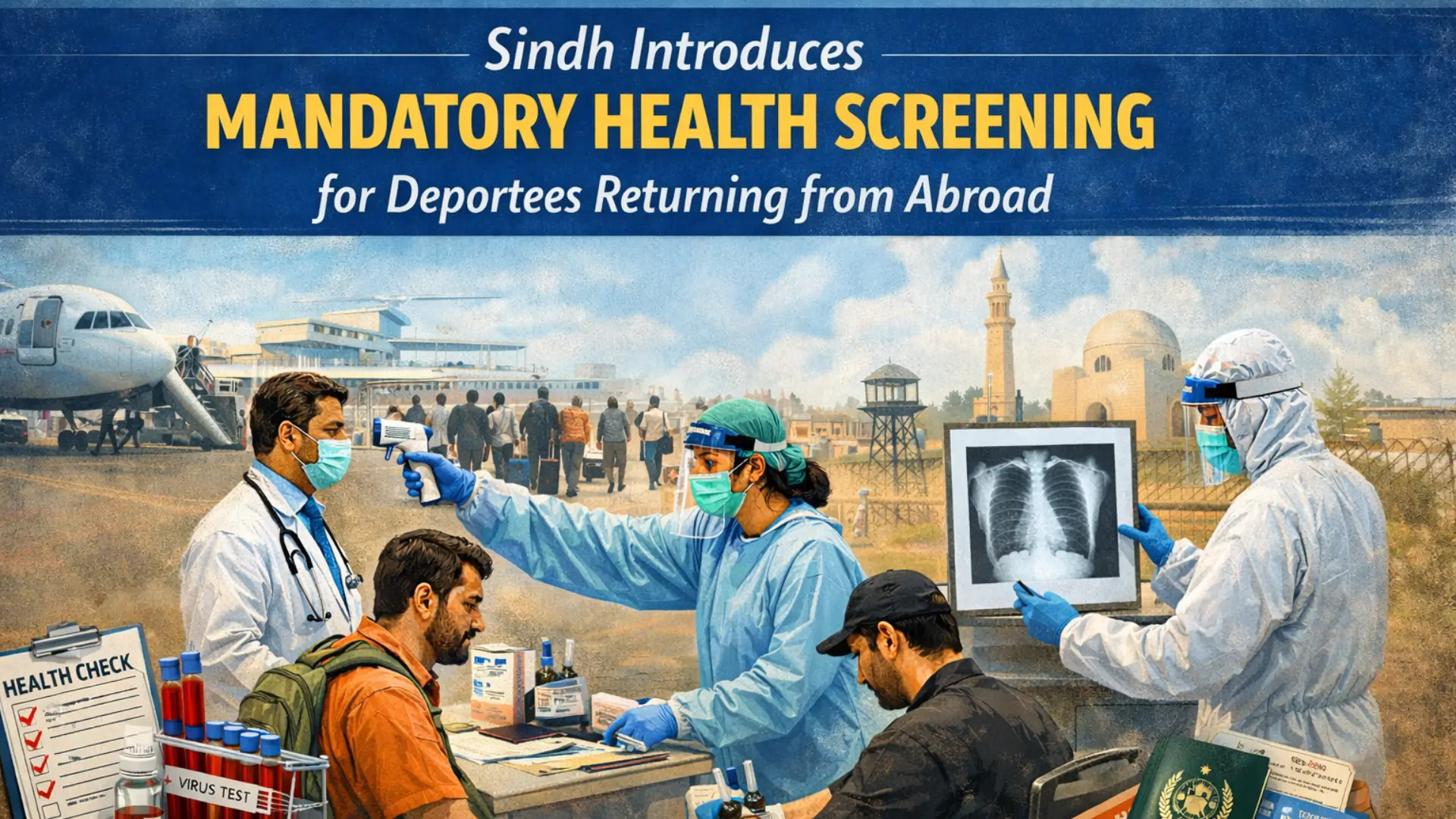
Sindh Introduces Mandatory Health Screening. The Sindh government has taken a significant step to protect public health by introducing mandatory health screening for deportees returning to Pakistan. This new initiative aims to reduce the risk of infectious diseases entering the local population and ensures that returning citizens receive timely medical care.

Under this policy, all deportees arriving at key entry points, including airports and border crossings, are now required to undergo tests for HIV, tuberculosis (TB), and hepatitis B and C. The policy comes in response to rising public health concerns linked to the increasing number of deportees returning from abroad without prior medical screening.
Rising Public Health Concerns
Health officials have long noted that a significant number of deportees return without undergoing proper medical examinations in the countries they leave. With 150 to 200 deportees arriving daily at Karachi’s Jinnah International Airport alone, authorities realized early detection of infectious diseases is critical to prevent potential outbreaks.
Over recent years, approximately 50,000 deportees have entered the province through various entry points, prompting the government to strengthen disease surveillance measures. The introduction of mandatory health checks is seen as a proactive measure to safeguard both the deportees and the general population.
Key Entry Points and Implementation
The Sindh Mandatory Health Screening for Deportees program has been rolled out at major entry points, with Jinnah International Airport serving as a primary hub. Other border crossings and ports are also included in the plan to ensure comprehensive coverage across the province.

Implementation Highlights:
- Screening is conducted at major airports and designated entry points.
- Daily arrivals of 150–200 deportees are monitored.
- Authorities track long-term inflow of deportees to anticipate public health risks.
By managing the process at entry points, officials can identify potential cases early and reduce the risk of silent transmission of infectious diseases.
Diseases Covered Under Mandatory Screening
The policy focuses on diseases that are known for their long-term health impacts and potential for silent transmission. These include:
- HIV (Human Immunodeficiency Virus)
- Tuberculosis (TB)
- Hepatitis B
- Hepatitis C
Health experts emphasize that early diagnosis is crucial for minimizing complications and preventing further community spread. Rapid testing and immediate follow-up treatment are central to this policy.

| Disease | Screening Method | Purpose |
|---|---|---|
| HIV | Rapid blood test | Early detection |
| Tuberculosis | X-ray screening | Identify active cases |
| Hepatitis B | Rapid test | Prevent transmission |
| Hepatitis C | Rapid test | Early treatment |
On-the-Spot Testing and Treatment
One of the key innovations in Sindh’s health screening initiative is on-the-spot testing, which allows authorities to obtain immediate results. Individuals who test positive are linked directly to treatment facilities and counseling programs, reducing delays in care.
Support Measures Include:
- Immediate testing upon arrival
- Referral to designated treatment centers
- Access to counseling and medical guidance
This approach ensures that deportees receive the care they need promptly while minimizing the risk of spreading infectious diseases within communities.
Healthcare Preparedness and Staff Training
To execute the program efficiently, the Sindh Health Department has equipped medical teams with modern diagnostic tools, including rapid test kits, X-ray machines, and personal protective equipment. Additionally, healthcare staff have received specialized training to conduct screenings professionally and with respect for deportees’ dignity.

Preparedness Measures Include:
- Availability of rapid diagnostic kits for all targeted diseases
- Proper use of personal protective equipment
- Specialized training for healthcare staff
- Ensuring respectful and dignified treatment for all deportees
Officials have emphasized that the process is designed to be supportive rather than punitive, encouraging cooperation from returning citizens.
Confidentiality and Privacy
Maintaining confidentiality is a core element of the initiative. Medical information is strictly protected to prevent stigma or discrimination against deportees who test positive.
Dr. Zafar Mehdi, focal person for communicable diseases at Karachi airport, stated that strict privacy protocols are in place. These measures build trust among deportees and ensure they cooperate fully with the screening process.

Coordination with Law Enforcement Agencies
The Sindh government has coordinated with the Federal Investigation Agency (FIA), airport authorities, and other relevant agencies to streamline the screening process. This collaboration ensures smooth management of arrivals while adhering to health and safety protocols.
Roles of Agencies in Implementation:
| Agency | Role |
|---|---|
| Sindh Health Department | Conduct screenings and provide treatment |
| Federal Investigation Agency (FIA) | Coordinate arrivals and maintain order |
| Airport Authorities | Logistical support at entry points |
By combining health and security measures, the program maintains efficiency while prioritizing public safety.
Public Health Objectives
The main goal of the Sindh Mandatory Health Screening for Deportees is to protect public health through early detection of infectious diseases. This policy supports:

- Prevention of disease spread among communities
- Strengthening public health monitoring and surveillance
- Prompt medical care and treatment for deportees
Officials also see the program as part of a broader strategy to ensure returning citizens are monitored and assisted appropriately, reducing long-term healthcare burdens.
Conclusion
The Sindh Mandatory Health Screening for Deportees initiative is a crucial step in safeguarding public health across the province. By ensuring immediate testing, maintaining confidentiality, and providing direct access to treatment, the government prevents the silent spread of infectious diseases while supporting returning citizens with timely medical care and counseling.